 Furqan Blogger
 Introduction
Artificial Intelligence in Business (AI) is no longer a hypothetical idea that exists in the world of science fiction. It has firmly reinvented itself as a disruptive entity in the business environment, reformatting sectors, refining processes, and opening new developmental entities. To comprehend the role of AI in business, it is necessary to take a closer look at the evolution of AI, practical applications, strong tools, and trends.
The Growth of Artificial Intelligence in Business

The use of AI in business has in the last decade gone up at an accelerated rate with the improved machine learning and natural language processing and data analytics.
The global AI market is expected to grow to hundreds of billions of dollars already in the coming years, as demand increases due to automation requirements, improved decision-making, and the desire to improve customer experience.
Why Businesses Are Investing in AI
The major role played by businesses in investing in AI is to acquire a competitive advantage. AI enables companies to:
- Control repetitive procedures: By cutting the number of manual tasks, the workers can be free of repetitive and more complicated work.
- Improve decision-making: AI processes large quantities of data to find the patterns and discoveries that humans do not notice.
- Enhance the customer experience: Chatbots, targeted marketing, and predictive analytics make the interactions more engaging.
- Become more innovative: R&D using AI boosts responsiveness to the market and the rapidness of the product development.
The use of AI is becoming part of the operational excellence and strategic planning of startups to multinational corporations.
Key AI Tools Transforming Business Operations

It is important to learn the tools that businesses operate on to realize the actual effect of AI on the world. Such technologies cut across diverse fields and are adopted according to certain business requirements.
Machine Learning and Predictive Analytics
Machine learning (ML) algorithms do not require explicit programming to learn and make predictions and influencing analytics that predict future trends and customer actions and financial results. Increases in retailers, inventory optimization, banks detect fraud, and predictive maintenance of equipment are being used.
Natural Language Processing (NLP)
NLP enables chatbots and other customer service machines to process and comprehend human language and is of great value in sentiment analysis, document processing, and chatbots. NLP is applied to business to process a large amount of customer interactions efficiently and make insights out of unstructured textual data.
Robotic Process Automation (RPA)
RPA uses rule-based operations, such as data entry, audit of invoices, and audits. This will minimize errors and operational expenses enabling companies to grow without the related proportional growth in the number of employees.
Computer Vision
Computer vision processes visual information, ranging between images to video and allows higher quality control of manufacturing, shelf monitoring at retail outlets, and security surveillance.
Cloud-Based AI Platforms
Cloud computing providers such as Amazon Web Services, Microsoft Azure and Google cloud have made AI accessible democratically by providing scalable, pre-packaged AI services. Such platforms reduce the entry point and speed-up deployment.
Integrating AI into Business Strategy
To achieve the practicality of AI, it should not be implemented as an autostandalone technology but incorporated into a rational business approach.
Data Strategy and Governance
AI thrives on quality data. This is a condition that requires the establishment of powerful data collection, storage, and governance structures. To gain trust in its customers and adherents of the regulating agencies, businesses should guarantee the correctness of their data, its privacy, and ethical means of usage.
Cross-Functional Collaboration
The successful AI projects involve coordination of activities between IT, data science, operations, and business units. This is a multidisciplinary focus that would guarantee that AI solutions are utilized with real business problems and that they meet the objectives of the organization.
Continuous Learning and Adaptation
AI models do not stand still and keep evolving as new data and changing market conditions emerge. To be effective and reduce the risks, businesses require procedures of continuous monitoring, retraining, and optimization of AI systems.
The Future of AI in Business: Trends and Predictions
In the future, the use of AI in businesses will become more natural, autonomous, and ubiquitous.
Hyper-Personalization at Scale
The AI will be able to mutually provide businesses with highly personalized product, service, and marketing campaigns at a scale never before realized to enhance customer loyalty and lifetime value.
Explainable AI and Ethical AI Practices
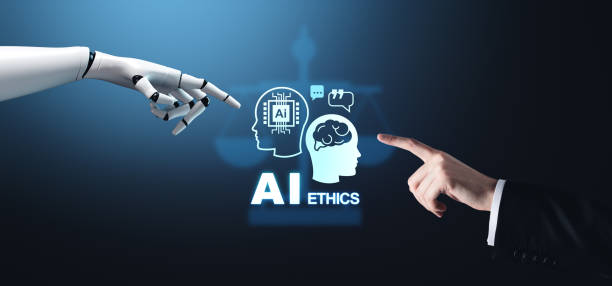
With the introduction of AI decisions involving more impactful fields, such as transparency and fairness will be the main concern. Businesses will be able to explain and justify AI-driven results, and gain the trust of stakeholders, with the help of explainable AI tools.
AI-Augmented Workforce
Instead of replacing humans, AI will expand the human abilities. Robots that think intelligently, support decision making systems and collaborative robots will increase productivity and creativity.
Expansion into New Business Models
Innovations such as AI-as-a-Service, autonomous operations, and AI-powered marketplaces will offer AI a new source of revenue.
For those interested in the detailed landscape of AI’s impact on business and society, the Wikipedia page on Artificial Intelligence Applications offers a comprehensive overview of current use cases and emerging trends.
Conclusion
The phenomenon of the Artificial intelligence in business is a paradigm shift both deep and extensive. It develops due to the practical advantages of efficiency, innovation, and customer experience, which is backed by an effective ecosystem of advanced tools.
Ai is bound to continue to be more highly embedded into fundamental business operations in the future, which would require strategic thinking, ethics, and the need to adapt continually.
FAQs
Q1: How can AI improve business decision-making?
Artificial intelligence supports decision-making through processing of large volumes of data to find the patterns and trends that would be missed by humans.
Q2: What are the most common AI tools used in business today?
The important AI tools are machine learning to do predictive analytics, natural language processing (NLP) to engage the customer, robotic process automation (RPA) to automate the repetitive tasks, and computer vision to do quality control and security.
Q3: Is AI expensive to implement for small businesses?
Although the deployment of AI may be expensive, cloud-based AI services have reduced entry obstacles through its pay-as-you-go services.
Q4: How does AI impact employment in businesses?
The artificial intelligence tends to complement human workers instead of replacing them, performing the routine work, and making decisions.
Q5: What ethical considerations should businesses keep in mind when using AI?
The businesses need to provide transparency, fairness, and privacy in the artificial intelligence.